Malta VAT Lottery Prizes Explained: Formula & Examples
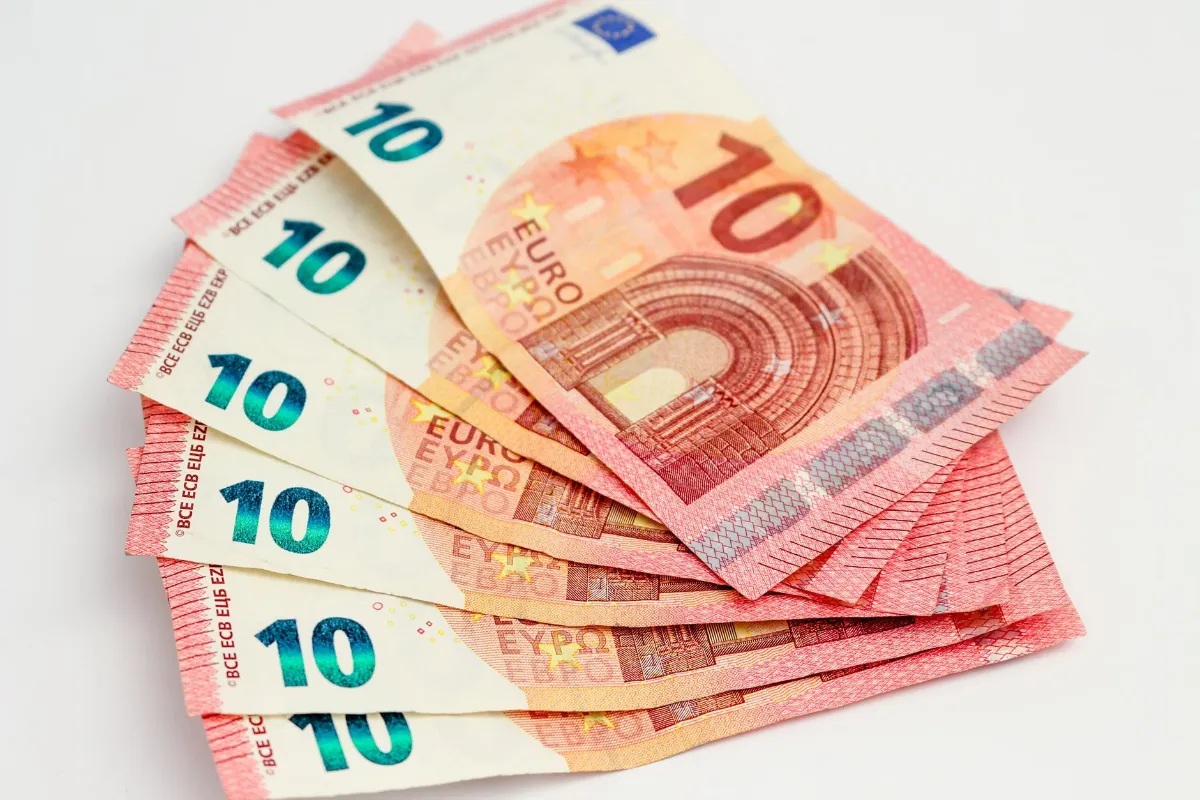
If you have ever written your name and ID card number on the back of a fiscal receipt and dropped it in the post, you have probably wondered what your number would actually be worth. The short answer: Malta VAT lottery prizes are the value of the winning receipt multiplied by 100, with a minimum of EUR 233 and a maximum of EUR 11,647. Nothing else affects the amount — not how many receipts you sent in, not how many other people won that month, not where you shopped.
That single formula explains why a EUR 3 coffee receipt is worth EUR 300, why a EUR 1.20 pastizzi receipt still pays EUR 233, and why a receipt for a sofa and a receipt for a fridge can pay exactly the same top prize. Below, each part of the rule is set out with real receipt values from our dataset of official results — 116 published draws from November 2016 to August 2026.
Malta VAT lottery prizes explained: the three rules that set your payout
The calculation has three steps, applied in this order:
- Multiply the receipt value by 100. A receipt for EUR 8.40 becomes EUR 840. A receipt for EUR 62 becomes EUR 6,200.
- Apply the minimum. If the result is below EUR 233, the prize is raised to EUR 233. Any receipt under EUR 2.33 therefore pays the flat minimum.
- Apply the cap. If the result is above EUR 11,647, the prize is reduced to EUR 11,647. Any receipt of EUR 116.47 or more pays the maximum.
So prizes run from EUR 233 to EUR 11,647, and the receipt values that make any difference to your payout sit in a narrow band: roughly EUR 2.33 to EUR 116.47. Outside that band, the amount you spent stops mattering.
Those two odd-looking figures — 233 and 11,647 — are the euro conversions of the Maltese lira amounts used before 2008 (Lm 100 and Lm 5,000). They have stayed fixed ever since, which is why they never round neatly.
What the formula looks like in practice
The middle column below is the raw calculation; the right-hand column is what is actually paid.
| Receipt value | Value x 100 | Prize paid | Rule applied |
|---|---|---|---|
| EUR 1.20 | EUR 120 | EUR 233 | Minimum |
| EUR 2.33 | EUR 233 | EUR 233 | Exact minimum |
| EUR 4.75 | EUR 475 | EUR 475 | Straight formula |
| EUR 18.90 | EUR 1,890 | EUR 1,890 | Straight formula |
| EUR 65.00 | EUR 6,500 | EUR 6,500 | Straight formula |
| EUR 116.47 | EUR 11,647 | EUR 11,647 | Exact cap |
| EUR 186.50 | EUR 18,650 | EUR 11,647 | Capped |
| EUR 10,645 | EUR 1,064,500 | EUR 11,647 | Capped |
The last row is not hypothetical. The largest receipt value ever drawn in our dataset was EUR 10,645, in the December 2022 draw. Multiplied by 100 it would have been worth more than a million euro; under the rules it paid the same EUR 11,647 as a receipt for EUR 116.47.
The minimum: why small receipts are worth keeping
The EUR 233 floor is the most underrated part of the scheme: no receipt is too small to be worth entering. A EUR 0.90 bus ticket, a EUR 1.50 bottle of water, a EUR 2 loaf of bread — if any of those is drawn, the holder receives EUR 233.
That has a practical consequence. Because the prize on small receipts is fixed, every extra receipt you submit is another ticket in the drum, whatever its value. Ten receipts of EUR 2 give you ten separate chances at EUR 233; one receipt of EUR 20 gives you a single chance at EUR 2,000. Neither approach is better in any official sense — it depends on whether you prefer more entries or a bigger potential payout per entry.
What the minimum does rule out is discarding low-value receipts as “not worth the stamp”. They are worth exactly as much as any other minimum-value entry.
The cap: EUR 11,647 and the receipts that reach it
The ceiling kicks in at EUR 116.47, and reaching it is not rare: across our dataset, 115 winning receipts have paid the full EUR 11,647 — roughly one capped win per published draw, out of 3,116 winners in total, or about 3.7% of all prizes.
Five recent capped wins show how modest the receipt values often are:
| Draw | Winning receipt | Prize paid |
|---|---|---|
| July 2026 | EUR 186.50 | EUR 11,647 |
| June 2026 | EUR 175.00 | EUR 11,647 |
| June 2026 | EUR 136.70 | EUR 11,647 |
| May 2026 | EUR 156.50 | EUR 11,647 |
| April 2026 | EUR 127.95 | EUR 11,647 |
None is a luxury purchase. A weekly supermarket shop for a family, a garage service, a dentist’s bill, a pair of glasses or a small appliance can all clear EUR 116.47. The receipts most likely to deliver the maximum prize are ordinary household spending, not once-a-year splurges.
It also means the receipt for a EUR 3,000 kitchen carries no more prize potential than the receipt for a EUR 120 weekly shop. Both are capped at the same figure. Past the EUR 116.47 threshold, breadth beats size.
How many winners are drawn each month
The number of winners varies from draw to draw, because the Public Lotto Department draws a set of receipts rather than a fixed prize pool. Across the 116 draws in our dataset, the average is 26.9 winners per draw. The most recent draw, August 2026, produced 41 winners.
Year by year:
| Year | Winners |
|---|---|
| 2016 (from November) | 46 |
| 2017 | 300 |
| 2018 | 283 |
| 2019 | 350 |
| 2020 | 286 |
| 2021 | 306 |
| 2022 | 309 |
| 2023 | 289 |
| 2024 | 331 |
| 2025 | 351 |
| 2026 (to August) | 265 |
Over a full year, then, roughly 300 people in Malta receive a fiscal receipts lottery prize. The full month-by-month breakdown, including receipt values and prize amounts, is in all draws by month.
How to enter, and what happens after the draw
The mechanics have not changed in years:
- Write on the back of the fiscal receipt: your full name, ID card number and a contact phone number. Receipts without these details cannot be matched to a winner.
- Submit before the deadline. Receipts must be delivered by hand to the Fiscal Receipts Lottery, Qasam Industrijali, Marsa MRA007C, or posted to the Fiscal Receipts Lottery, P.O. Box 288, Valletta. The cut-off is typically noon a few days before the draw.
- Each monthly draw covers the previous calendar month’s receipts. The draw is held at the Public Lotto Department, normally around the 15th.
- Anyone can take part. All fiscal receipts issued in Malta are eligible regardless of the holder’s nationality, so visitors enter on the same terms as residents — just use the identity document number you would normally quote.
After the draw, the Ministry for Finance publishes a PDF listing the winning ID card numbers alongside the receipt details on the official fiscal receipts lottery results page. Winners are identified by ID number, not by name, so checking means scanning the list for your own number. Prizes are then arranged through the Public Lotto Department using the contact details written on the receipt — which is why an out-of-date phone number is worth avoiding.
Three things people commonly get wrong
“The prize depends on how many people won that month.” It does not. Each winning receipt is calculated independently, so a draw with 41 winners does not pay smaller prizes than a draw with 15.
“VAT lottery winnings are taxed.” Prizes are paid as stated. For questions about your own tax position, ask the Commissioner for Tax and Customs rather than an unofficial source.
“You need a big purchase to win big.” The ceiling threshold is EUR 116.47, and everyday spending crosses it regularly.
One further point: the scheme exists to encourage people to ask for a fiscal receipt in the first place. That is its purpose from the government’s side, and it is also the only way to enter — a receipt that was never issued cannot win anything.
Keep an eye on the next draw
The simplest habit is to keep a small envelope by the door, write your details on receipts as you get them, and post the lot once a month before the deadline. Then check the results when they are published.
You can see the latest results as soon as they are republished here, browse all draws by month for historical receipt values and prizes, and sign up for email notifications so the monthly winning numbers land in your inbox.
Frequently asked questions
How is a Malta VAT lottery prize calculated?
The prize is the value of the winning fiscal receipt multiplied by 100, subject to a minimum of EUR 233 and a maximum of EUR 11,647. So a EUR 5 receipt pays EUR 500, a EUR 1.50 receipt pays the EUR 233 minimum, and any receipt of EUR 116.47 or more pays the EUR 11,647 cap.
What is the biggest prize you can win in Malta's fiscal receipts lottery?
EUR 11,647. Across the 116 draws in our dataset of official results, 115 winning receipts have paid this maximum, including receipts of EUR 186.50 (July 2026) and EUR 127.95 (April 2026). The largest receipt ever drawn was EUR 10,645 in December 2022, and it also paid EUR 11,647 because of the cap.
Is it worth entering small receipts?
Yes. Because of the EUR 233 minimum, even a receipt for under EUR 2.33 pays EUR 233 if drawn. Every receipt you submit is a separate entry, so small receipts add chances rather than diluting them.
How many people win each month?
It varies by draw. Across 116 published draws the average is 26.9 winners per draw, or roughly 300 winners a year. The August 2026 draw produced 41 winners.
Can tourists and non-residents win?
Yes. All fiscal receipts issued in Malta are eligible regardless of the holder's nationality. You need to write your name, identity document number and a contact phone number on the back of the receipt and submit it before the deadline.
Sources: finance.gov.mt